An agent is more than its model. Its behavior depends on instructions, tools, credentials, memory, data, workflow state, and the people responsible for intervention. The NIST AI Agent Standards Initiative highlights the need for secure, interoperable agent systems, while the NIST AI Risk Management Framework provides a broader structure for managing risk across the system lifecycle.
What stages belong in the agent lifecycle?
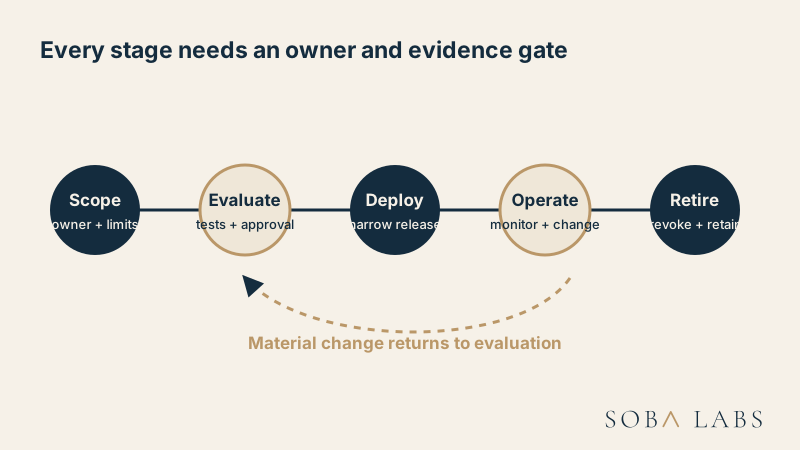
Start by defining a bounded business outcome, owner, users, data, and prohibited actions. Design then turns that boundary into tools, permissions, prompts, state, and approval points. Before agent deployment, AI agent evals test the intended behavior and the failure paths that matter. A stage is complete only when its evidence gate passes.
Deployment is not the finish. Production adds live dependencies, changing data, real users, and costs. LLM observability should connect traces, tool results, latency, and business outcomes so the owner can see whether the agent still performs the approved job.
Who owns a production agent after launch?
One named business owner should remain accountable for the outcome and risk. Engineering may operate the runtime, security may set access rules, and legal may interpret duties, but the business owner decides whether the agent remains useful and acceptable. Shared participation must not become shared ambiguity.
AI governance defines the review rhythm, evidence requirements, and decision rights. Material changes to models, prompts, tools, permissions, or use cases return the agent to the relevant design and evaluation gates instead of bypassing them as routine maintenance.
How should teams manage incidents and change?
Every agent needs thresholds for pause, escalation, rollback, and recovery. Agent incident response identifies who may stop the system, preserve evidence, assess external effects, and approve recovery. A production change is safe only when the team can detect and reverse its consequences.
Version the configuration that shapes behavior and record which version handled each task. Roll out changes to a limited audience first, compare them against the previous baseline, and stop expansion when safety or business metrics deteriorate.
What does responsible agent retirement require?
Retirement removes credentials, schedules, webhooks, queues, stored secrets, and user entry points. It preserves records required for audits or incidents, assigns unfinished work, and confirms that dependent systems no longer call the agent. Turning off the interface is not the same as removing the operating capability.
The lifecycle ends only when ownership, data retention, dependencies, and residual obligations have been closed. That final evidence matters because forgotten agents can retain access long after their visible business use disappears.