This distinction matters as generated media becomes ordinary business content. A viewer may need to know which tool produced an asset, whether an editor changed it, and whether the record survived delivery. The C2PA technical specification defines an open standard for this information, and the European Commission explains transparency duties for certain generated content in its AI Act overview.
How does content provenance work?
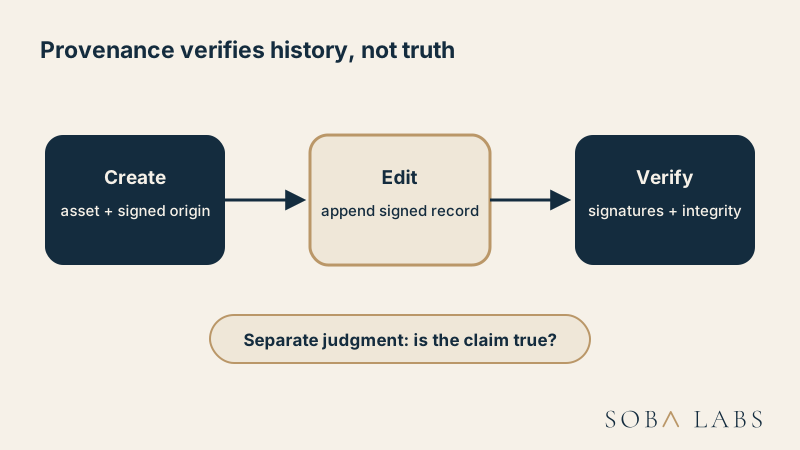
A creator, camera, or software tool produces an asset and a manifest describing relevant facts. It signs that manifest with a credential and binds it to the file. Later tools can add signed edit assertions, creating a chain that a verifier checks. A valid signature supports the recorded origin and history, not the truth of the content.
C2PA calls the user facing form of this system Content Credentials. The record may identify a tool, organization, timestamp, or type of edit, depending on what the signer discloses and what the receiving platform preserves.
How is provenance different from AI watermarking?
AI watermarking places a visible or hidden signal inside the content. Detection can help identify likely machine generation, but editing, compression, translation, cropping, or regeneration may weaken the signal. Provenance carries an authenticated history, while a watermark carries a detectable clue.
The two methods can complement each other. A watermark may survive when metadata is stripped, while signed provenance can explain a sequence of edits that a simple detector cannot. Neither method should be the only basis for a consequential decision.
When should a company use content provenance?
Use it when publishing generated or heavily edited marketing media, receiving assets from outside contributors, maintaining licensed creative work, or helping customers understand how content was produced. Multimodal LLMs make this especially relevant because one workflow can now create text, images, voice, and video. The strongest implementation starts at creation and preserves the chain through every delivery system.
Teams should decide which tools may sign, how keys are protected, which assertions are disclosed, and what happens when a platform removes credentials. AI transparency still requires plain language for the audience rather than forcing people to inspect technical metadata.
What are the limits of content provenance?
A valid record can be attached to misleading media, a trusted account can be compromised, and a screenshot can discard the original manifest. Missing credentials also prove little because adoption is incomplete. Provenance is useful positive evidence, not a universal detector of falsehood.
Combine verification with source evaluation, access controls, and responsible AI practices. The goal is not to label every file with certainty. It is to give people stronger evidence about origin and change when that evidence is available.