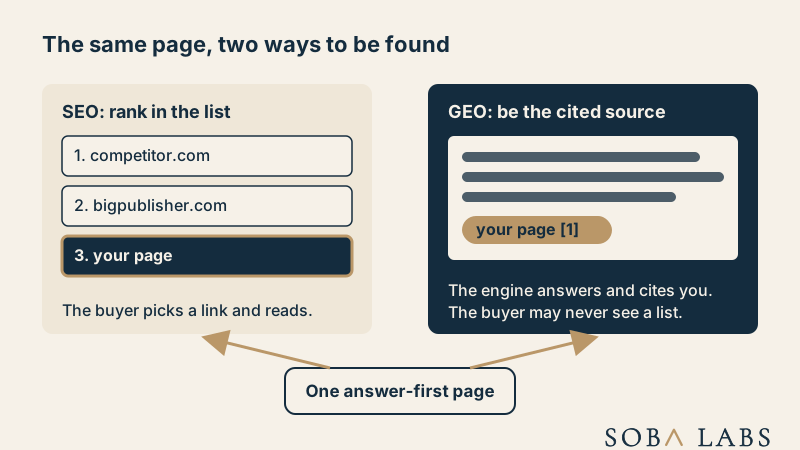
How is GEO different from SEO?
The surface changed, not the goal. An answer engine reads sources and composes one reply, so the contested asset is no longer a blue link but a citation inside the answer. The term entered research in the 2023 paper that named it, which reported visibility gains of up to 40 percent from source-level changes such as adding statistics, quotations and citations (Aggarwal et al., “GEO: Generative Engine Optimization”, read 26 October 2026). The ranked list rewarded being first; the generated answer rewards being quotable. What stays the same is the foundation: Google’s guidance for AI features says established SEO practices still apply to AI Overviews and AI Mode, and a page must generally be indexed and snippet-eligible before it can be cited (read 26 October 2026).
What actually earns a citation?
Content an engine can lift without rewriting. That means a direct answer in the first sentences, one concept per page, question-form headings, comparison tables, structured data that machines parse cleanly, and specifics with named sources, because an engine citing you is staking its own credibility on your page. Original numbers and first-hand experience outperform paraphrases of what the engine already knows. A page that answers in its first forty words is doing GEO whether or not anyone called it that.
How do you measure GEO?
Count citations, not positions. The working signals are which questions cite your pages in AI Overviews and chat answers, which competitors appear when you do not, and how often assistants fetch your pages live; Bing’s AI Performance dashboard now reports cited URLs directly (read 26 October 2026). Expect fewer clicks per impression than classic search, since many answers resolve without a visit; the compensation is that a citation reaches the buyer at the moment of the question, with the engine’s own authority behind it.
How do we practice GEO at Soba Labs?
As monitoring wired to action. For the footwear retailer Wojas we built a platform that tracks classic rankings and generative citations side by side, records which competitors are cited when Wojas is not, and has an AI agent turn those signals into content recommendations a person reviews before anything is published. Citation monitoring only pays when each report ends in a next action. We run the same loop on our own site: the pages of this glossary are checked against AI Overviews and assistant fetch logs, and the few pages engines have cited so far are concrete, sourced and answer-first, the shape this entry prescribes.
What should a buyer be skeptical about?
GEO sold as tricks. The measured gains in the research came from substance, statistics, sources and clarity, not from hidden prompts or keyword stuffing, and engines penalize or ignore manipulation they detect. A vendor promising guaranteed citations controls neither the engine nor its retrieval. Fund content worth citing, measure citations honestly, and treat anything that cannot show its mechanism as hallucination insurance you did not need.