The term is commonly used as a model-specific synonym for an AI gateway. The pattern extends ordinary API gateway responsibilities with concerns such as token usage, prompt metadata, streaming, tool calls, and provider differences.
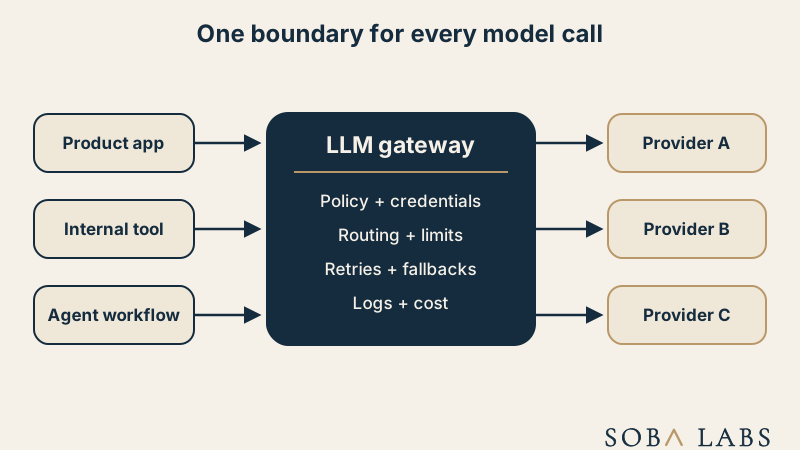
An LLM gateway creates one enforceable boundary for model traffic across applications and providers.
What does an LLM gateway control?
The gateway can own credentials, approved model lists, request limits, timeouts, retries, and audit metadata. Centralizing these controls prevents every application team from implementing the same sensitive integration differently. It can also normalize selected request fields through an OpenAI-compatible API or another internal contract.
Observability is a major benefit. The gateway can record provider, model, latency, token use, cost, errors, and policy decisions for each call without exposing provider keys to every application. Sensitive prompts and outputs still need explicit redaction and retention rules.
How does an LLM gateway support multiple providers?
A gateway can connect provider-specific adapters behind one application-facing interface. It may route requests by capability, region, price, or availability using model routing. The interface can reduce integration duplication, but it cannot erase differences in model behavior. Tools, structured output, context limits, safety behavior, and errors must be tested for each route.
Fallback is useful only when the second provider can safely complete the same task. An untested fallback turns a provider outage into a different production failure. Keep route eligibility and acceptance checks explicit.
Does a gateway improve model portability?
It improves one part of model portability by separating application code from provider authentication and transport. Portable prompts, tool schemas, evaluations, and data remain separate responsibilities. Provider-specific features can still create AI vendor lock-in behind a clean gateway interface.
The gateway itself can also become a dependency. Keep its contract small, export operational data, and document the path for direct provider access if the gateway is unavailable.
When is an LLM gateway worth adding?
Add one when several applications share model access, multiple providers solve a real need, security requires centralized credentials, or cost and audit controls need one owner. A single small application with one approved provider may not need the extra hop. Start direct, then introduce a gateway when duplicated controls or operating risk become visible.
For a multi-provider AI system, the gateway is often the narrowest place to implement routing and governance. It should remain infrastructure, not a second application full of hidden business logic.
Kong’s AI Gateway documentation provides a current example of gateway controls for model traffic.