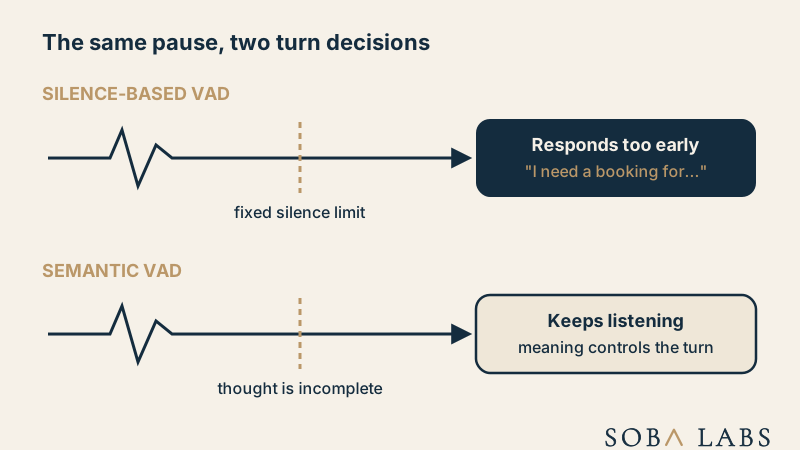
How does semantic VAD make a turn decision?
It combines acoustic speech boundaries with a model’s estimate of utterance completeness. The system asks whether the thought is finished, not only whether the room became quiet. A person may pause after saying, “I need a booking for,” because they are checking a date. A fixed silence threshold can treat that pause as the end of the request. A semantic decision can keep listening because the grammar and meaning indicate unfinished speech.
The opposite case also matters. “Yes” may be complete even when the caller leaves almost no trailing silence. Meaning-aware detection can release that turn without waiting for a conservative timeout. OpenAI’s VAD guide distinguishes silence-based server VAD from semantic VAD and exposes an eagerness setting for response timing.
How is it different from ordinary VAD?
Voice activity detection answers whether audio contains speech. It can find the beginning and end of a sound segment without understanding the words. Semantic VAD uses speech content to estimate whether a conversational turn is complete. Ordinary VAD detects audio activity, while semantic VAD helps decide conversational readiness.
They usually work together. Acoustic VAD limits the audio regions that need processing. Transcription or an audio model provides linguistic information. The turn policy combines those signals with timing and task context. Endpointing then finalizes the utterance for the next system step.
When is semantic VAD useful?
Use it when natural pauses, multi-part requests, or varied speaking styles make fixed thresholds brittle. Addresses, names, dates, and corrections often contain hesitation. Fast conversational systems also benefit when short complete answers should release immediately. Semantic VAD is valuable when the cost of cutting off meaning exceeds the cost of running a richer turn decision.
It is not automatically the right choice for every utterance. A simple command grammar may work well with deterministic timing. A semantic model adds computation, can misunderstand unusual phrasing, and may wait too long when the caller trails off. A realtime AI API must expose settings and events clearly enough to investigate those decisions.
How should teams evaluate it?
Measure false interruptions, delayed responses, abandoned turns, corrections, and end-to-end latency. Test different accents, languages, background noise, filler words, partial sentences, and long thinking pauses. The evaluation set must include both incomplete pauses and short complete answers. Otherwise a change can improve one case while breaking the other.
Track the signal that ended every turn. Logs should show whether silence, semantic completion, a timeout, or an explicit client event triggered the response. Test barge-in separately because speech during agent playback has different meaning from a pause during caller input.