The point is not to copy an enterprise org chart. A useful model makes decisions and handoffs clear for the company that has to operate them. It answers who can propose a use case, who owns the data, who approves risk, who supports a live agent, and who decides whether the result was worth the cost.
What work does an AI operating model coordinate?
It connects four kinds of work that often drift apart. Business teams name and own the workflow. Technical teams build or configure the system. Security and legal teams set the boundaries for data, vendors, and actions. Leadership funds the work and decides what scales. An operating model makes these responsibilities explicit before a pilot becomes a dependency.
The model should include an intake for candidate work, a repeatable AI use case prioritization method, delivery standards, an approval path, and a way to measure the result after launch. It also needs support, incident response, and a retirement path. AI systems change through model updates, new data, altered tools, and shifts in the workflow they support.
Should AI delivery be central, local, or both?
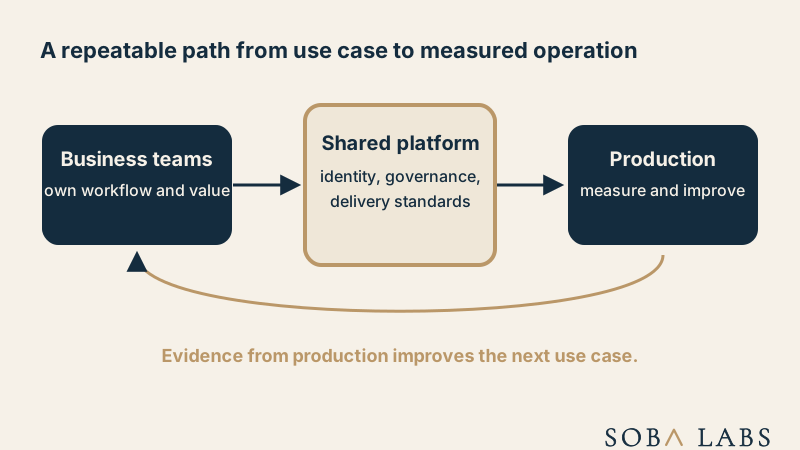
Small organizations often begin with one accountable owner and a few shared rules. Larger organizations usually need a mix. A central team can provide approved tools, identity controls, evaluation methods, and operating standards. Domain teams can own the business problem and day-to-day adoption. Centralize controls that must be consistent, and keep workflow ownership close to the people doing the work.
The right division depends on risk and capability. Customer-facing agents and systems that change production data need tighter review than an internal writing assistant. A mature business unit may build within central standards, while a new team may need more direct help. AI governance describes the rules. The operating model makes those rules part of delivery.
What should happen before a system reaches production?
Each system needs an owner, intended users, data sources, success measure, failure limits, and escalation path. AI inventory should record the system and its dependencies. A vendor assessment is needed when an external provider handles data or supplies a core capability. Testing should include normal work, bad inputs, and the actions a compromised agent must not perform.
Production ownership starts before launch, when the team still has time to change the design. If nobody can explain who reviews failures or pays for ongoing use, the project is not ready to scale.
How does the model improve over time?
Run a short review cycle around evidence, not enthusiasm. Compare actual outcomes with the original metric. Inspect where people override the system, where it fails, which controls create friction, and whether the workflow changed. AI adoption is not complete when a tool is enabled. It is complete when the people who own the workflow can use it safely and achieve the intended result.
As the portfolio grows, reuse the same intake, identity, evaluation, and monitoring patterns. Repeatable controls make new use cases cheaper to deliver and easier to audit. The operating model should stay small enough that teams follow it. A process that only works for a committee will send real work back into shadow AI.